By Emma Alley
Fall is one of my favorite times to rethink a landscape in Greenville, SC. Cooler temperatures make spending time outdoors more enjoyable, and the changing colors make it easy to see where your yard could use more texture, structure, or seasonal interest. This year, I’m seeing homeowners gravitate toward landscapes that feel natural, warm, and beautiful without requiring constant maintenance.
Layers in the Landscape
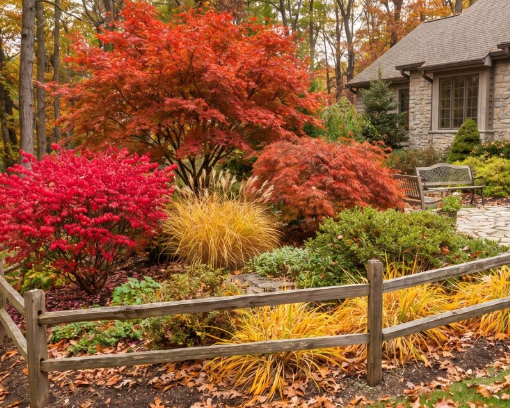
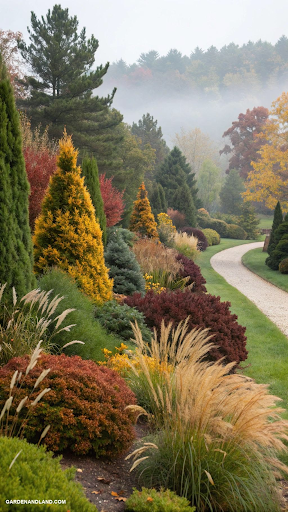
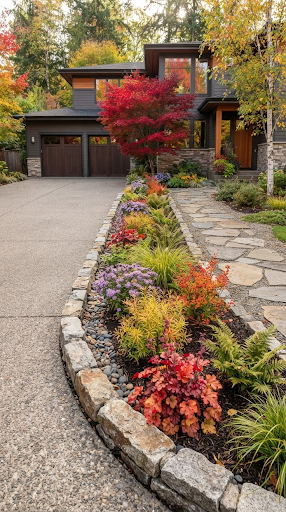
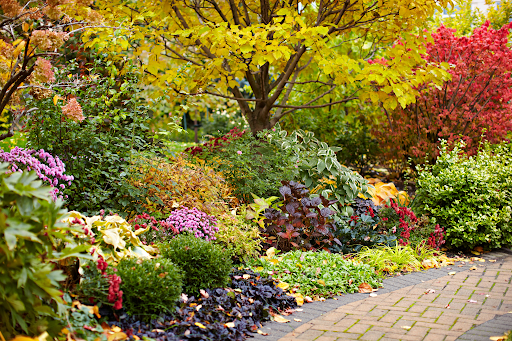
Just like we add on layers as it gets colder – why not add layers to your landscape too? Using the layered approach when planning your landscape design gives you the chance to create dynamic visual interest in your yard. Layering can also help a landscape feel fuller and more established while reducing awkward bare spaces between plants. Repeating certain plants or colors throughout the layers helps create a cohesive design. At the same time, varying plant heights, colors, and textures gives the eye something different to notice in each layer while maintaining a uniform, natural look. An example of a three-tiered layered design would be:
- Top Layer: Japanese Maples, Dogwoods, Red Maples
- Middle Layer: Oakleaf Hydrangea, Viburnums, Switchgrass
- Bottom Layer: Black-Eyed Susans, Butterfly Milkweed, Coral Bells
Give It Up for Grasses!
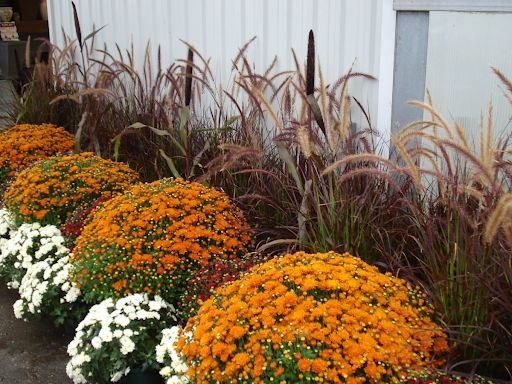
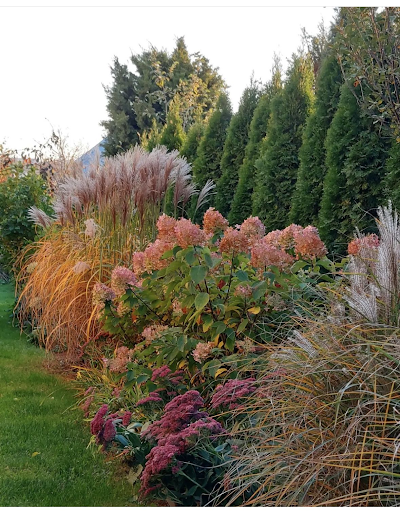
Looking to incorporate something fun, easy to care for, and full of movement and texture? Grasses are your friend! Some of my favorites to add to landscape designs are Pink Muhly Grass, Switchgrass, and Purple Fountain Grass. They look especially beautiful in Greenville landscapes as summer flowers begin to fade, adding height, texture, and color to the garden. As an added bonus, many ornamental grasses can be left standing through winter, providing movement and interest even after much of the garden has gone dormant.
Be a Good Neighbor – Plant Native!
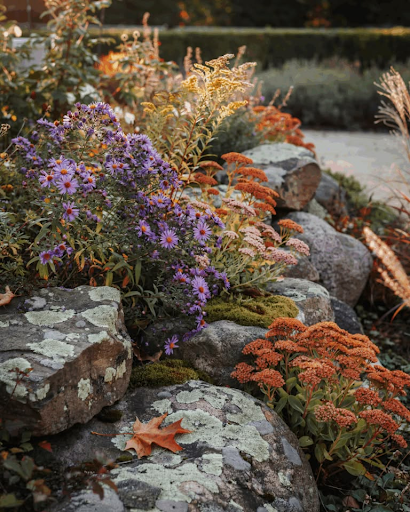
Speaking of easy to care for plants – let’s talk natives! Species like Black-Eyed Susans, Carolina Jessamine and Native Azaleas thrive in our climate while requiring less maintenance and water. These plants also support local pollinators and wildlife, creating a healthier ecosystem right in your backyard. Natives don’t have to mean a wild or unstructured landscape, either. Mixed with evergreens, ornamental grasses, and other well-behaved plants, they can fit beautifully into both traditional and more naturalistic designs.
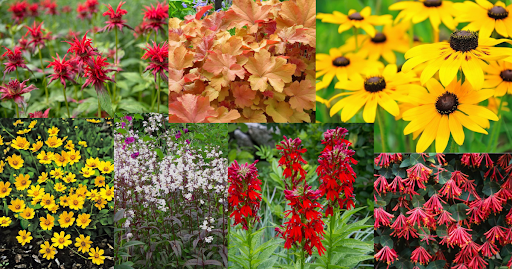
Some of my favorite natives for fall color include: Monarda Bee Balm, Lonicera sempervirens Coral Honeysuckle, Coreopsis auriculata ‘Nana’ Tickseed, Black-Eyed Susan, ‘Huskers Red’ Penstemon, Coral Bells, Lobelia cardinalis Cardinal Flower
Fall-Friendly Front Entrance
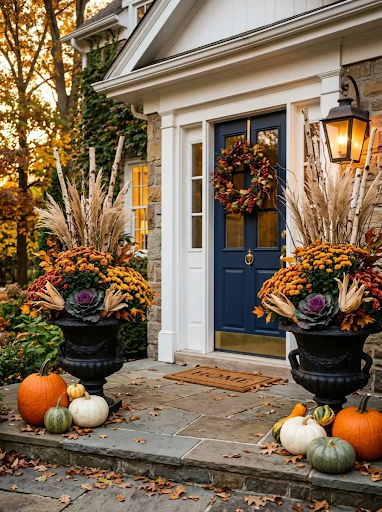
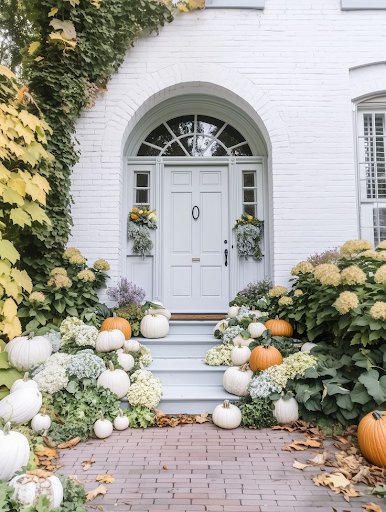
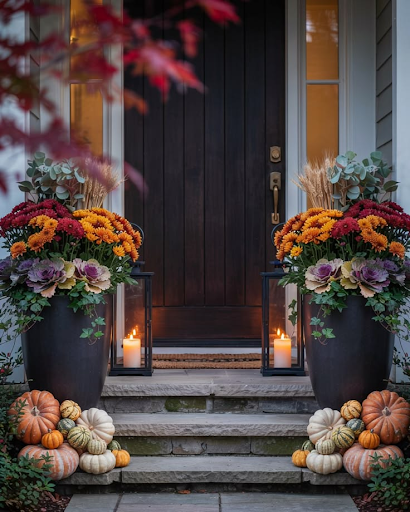
Give your front entrance the warm fall welcome it deserves! There’s so much more you can do with your front entryway than simply place a few potted mums. Pansies, violas, ornamental kale, snapdragons, asters, and other cool-season selections can create much more interesting combinations. For an easy designer look, think in layers: start with a taller focal plant, surround it with colorful seasonal flowers, then finish with trailing plants or natural accents around the base. Add pumpkins in different colors and shapes for depth, hay bales for a touch of nostalgia, and landscape lighting to highlight your entryway after dark.
Gathering Spaces for Fall
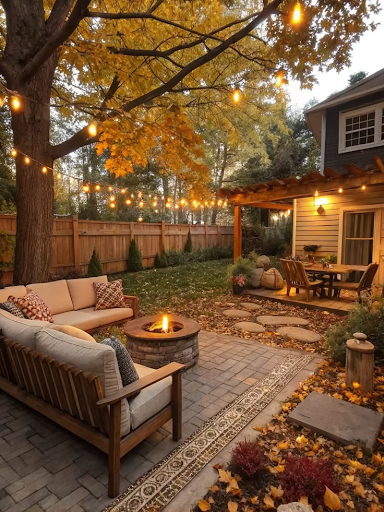
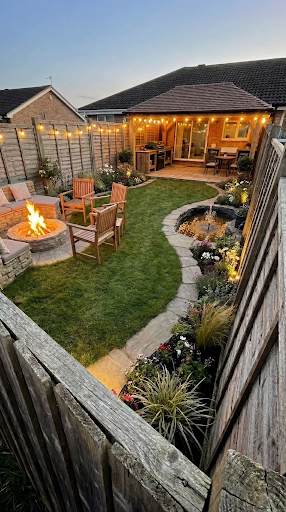
What better way to enjoy Greenville’s beautiful fall weather than an outdoor living space? Whether you’re looking for a place to gather with friends or your own private oasis, features like a patio, fire pit, landscape lighting, fountain, and thoughtful plantings can make your backyard more inviting during cooler evenings. Think beyond the patio itself and consider what makes the space comfortable after sunset. Seat walls, cozy fire features, pathway lighting, privacy plantings, and even the sound of moving water can turn an ordinary backyard into a space you’ll actually want to use on cool fall evenings.
Constant Color with Evergreens
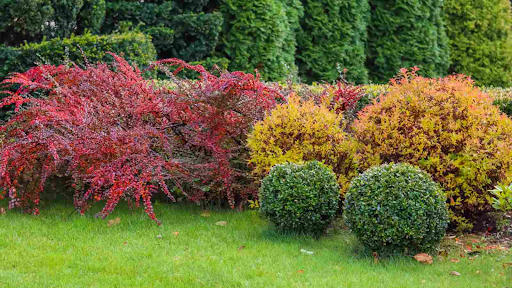
Fall color is temporary. Using evergreens as a backbone helps Greenville landscapes transition from colorful October and November displays into winter without suddenly looking bare. Use evergreens around the foundation of the home or throughout planting beds to create structure, then layer flowering shrubs, perennials, and ornamental grasses around them. This gives the landscape a dependable green framework while still allowing plenty of seasonal color.
Some of my go-to evergreens for Greenville landscapes are Indian Hawthorn, Arborvitae, and Distylium. These are great options for adding year-round structure, whether you need a compact foundation shrub, a taller screen, or something dependable to fill out a planting bed.
Hardscaping as the Backbone
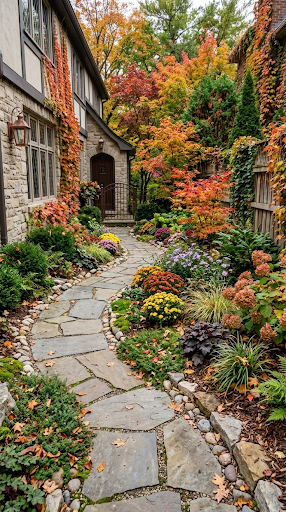
Just like evergreens, natural hardscaping gives your landscape a year-round foundation to build around. Stone steps, boulders, retaining walls, gravel paths, and patios provide permanent visual interest as deciduous plants lose their leaves. Natural materials are especially effective in fall designs because their earthy colors complement changing foliage and help the landscape feel connected to its surroundings. Plants provide permanent living structure; hardscape provides permanent physical structure.
Fresh Fall Edible Landscaping
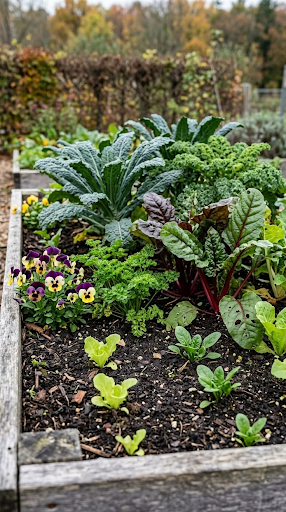
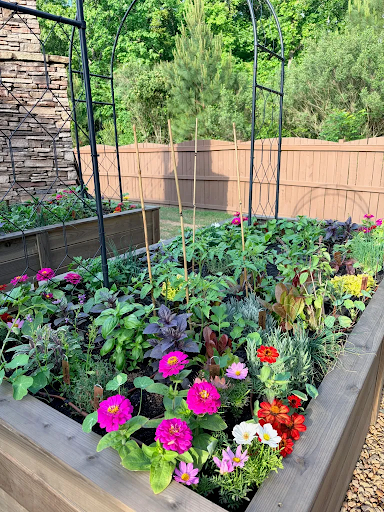
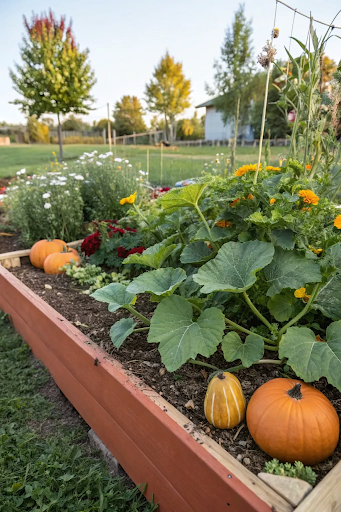
There is a growing desire for fresh, homegrown produce without sacrificing curb appeal. Incorporating edible plants into your landscape gives your property both beauty and purpose. Fig trees, blueberry bushes, herbs, and vegetable gardens can all become attractive features within a thoughtfully designed yard. And edibles don’t have to be hidden away in a separate garden – blueberries can work as attractive shrubs, herbs can edge a sunny bed, and raised gardens can become intentional design features within the overall landscape.
Light the Landscape & Set the Vibe
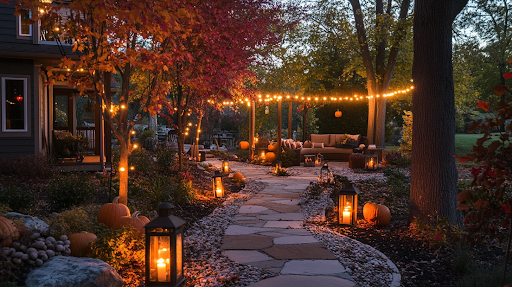
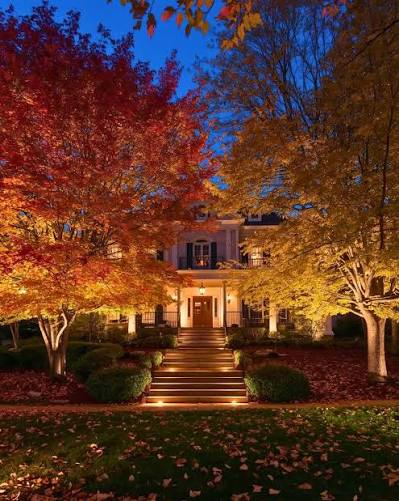
As fall approaches, the days get shorter – but that doesn’t mean you have to stop enjoying your landscape after sunset. Whether you are looking to highlight your new plants, elevate the look of your home, or simply set the vibe – landscape lighting is an easy and affordable way to “illuminate your outdoor space. Use it to uplight a nice specimen tree, show off stonework, or light the way with path lights. The goal isn’t to light every inch of the yard – strategically placed fixtures create contrast, depth, and a much more inviting atmosphere.
Plant Now – Your Future Self Will Thank You!
Fall is an excellent time to plant trees, shrubs and perennials because cooler temperatures reduce heat stress while the soil can remain warm enough for root development. Planting in fall gives your landscape a better chance to establish and thrive for years to come. Thinking beyond the current season pays off, too. A great fall landscape isn’t designed only for October – it’s planned so that something is always emerging, blooming, changing color, or providing structure throughout the year.
Ready to Fall in Love with Your Landscape?
Fall is about more than mums and pumpkins. It’s an opportunity to look at your landscape as a whole and add the layers, textures, structure, gathering spaces, and seasonal interest that make your property enjoyable throughout the year. Whether you’re adding a few native plants or completely rethinking your outdoor space, thoughtful fall improvements can create a landscape that looks better now and continues to improve with every season.
Ready to transform your Greenville, SC landscape?
Whether you’re dreaming of colorful new plantings, a cozy outdoor gathering space, or a complete landscape transformation, our team can help bring your vision to life.
Contact us today to start planning a landscape you’ll enjoy in every season.